Library of Congress
Preservation Research and Testing Division
Preservation Science
Building a Pigment Reference Database
Amanda Satorius
Project Summary
I built the foundations for a historical materials database to be used by Library staff. Over the course of 8 weeks, I used FTIR spectroscopy to characterize 50 colorant pigments from the Library’s reference materials collection.
Skills
Database: data organization, Excel
Communication: verbal presentation, written blog post for non-technical audience
Analytical techniques and instruments:
- Portable FTIR spectroscopy (Bruker Alpha FTIR with ATR, DRIFTS, Transmission modules)
- Carver Hydraulic Press
- KBr sample preparation for transmission and DRIFTS
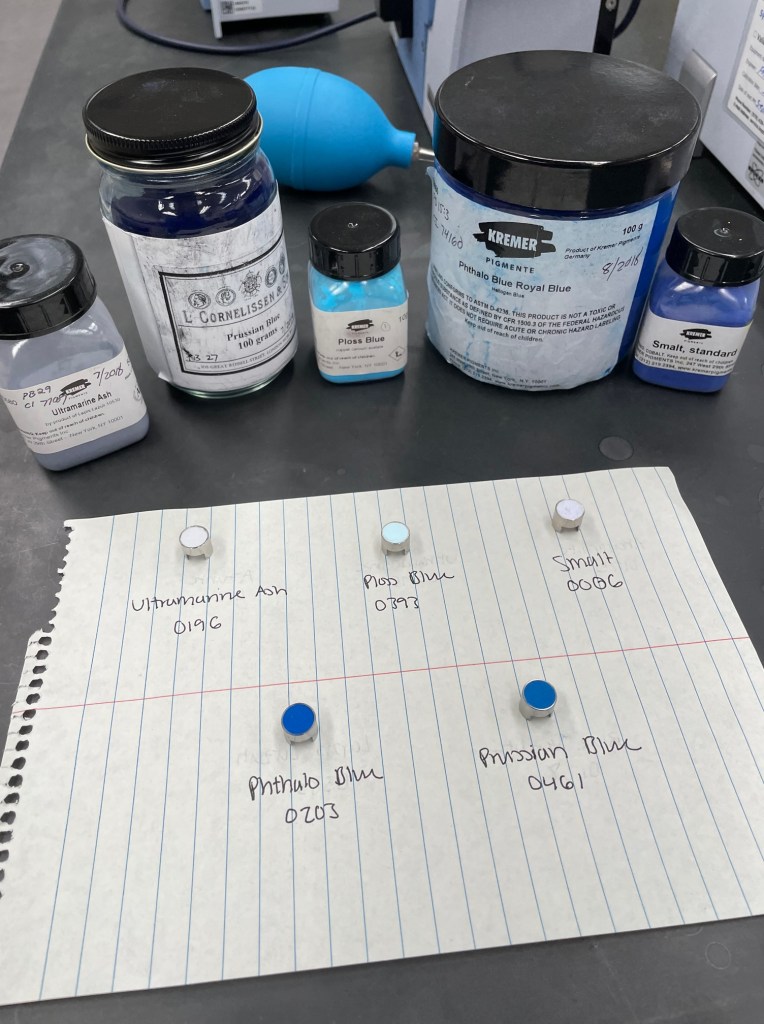
A selection of blue pigments prepared for DRIFTS-FTIR spectroscopy.
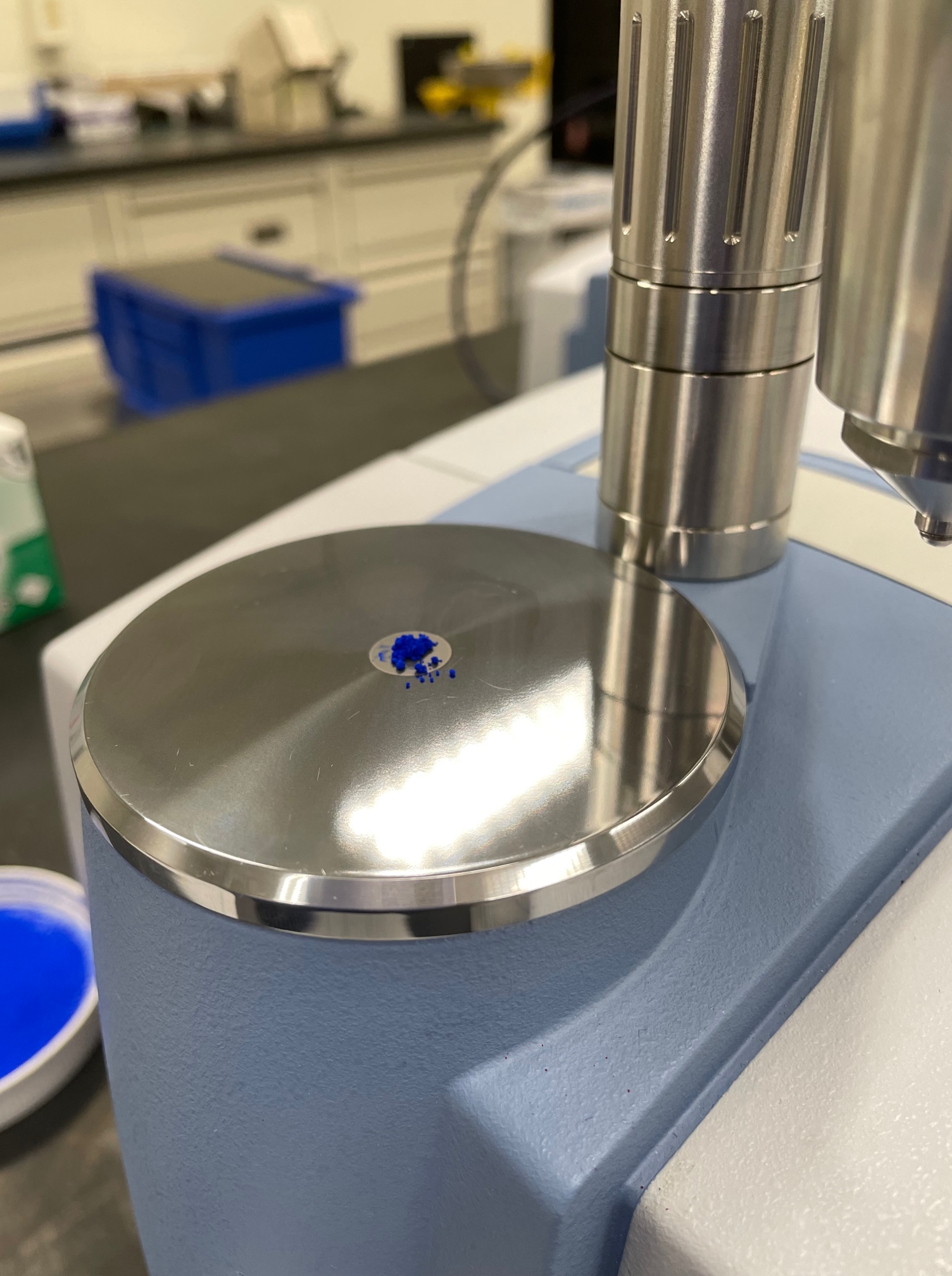
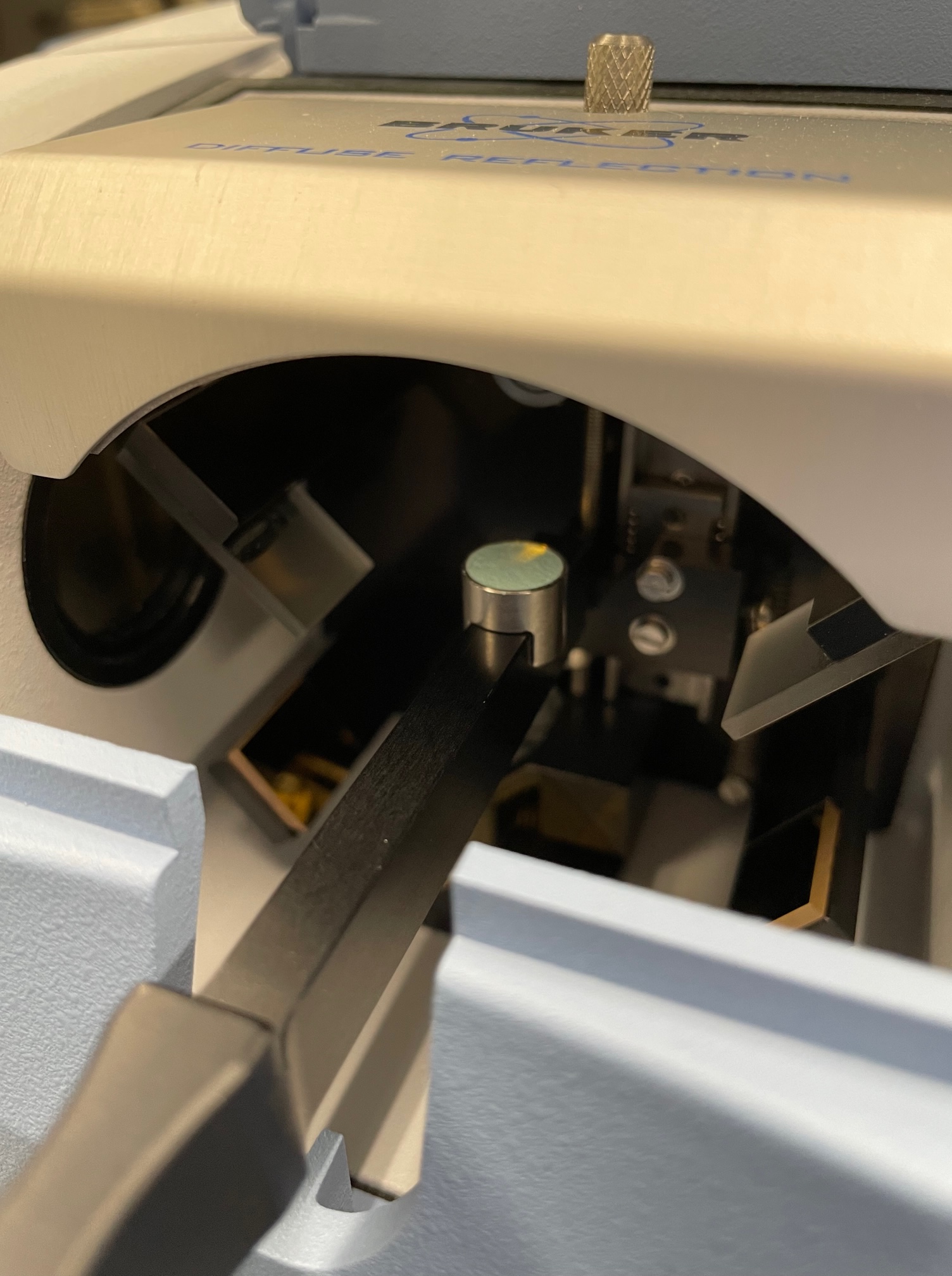
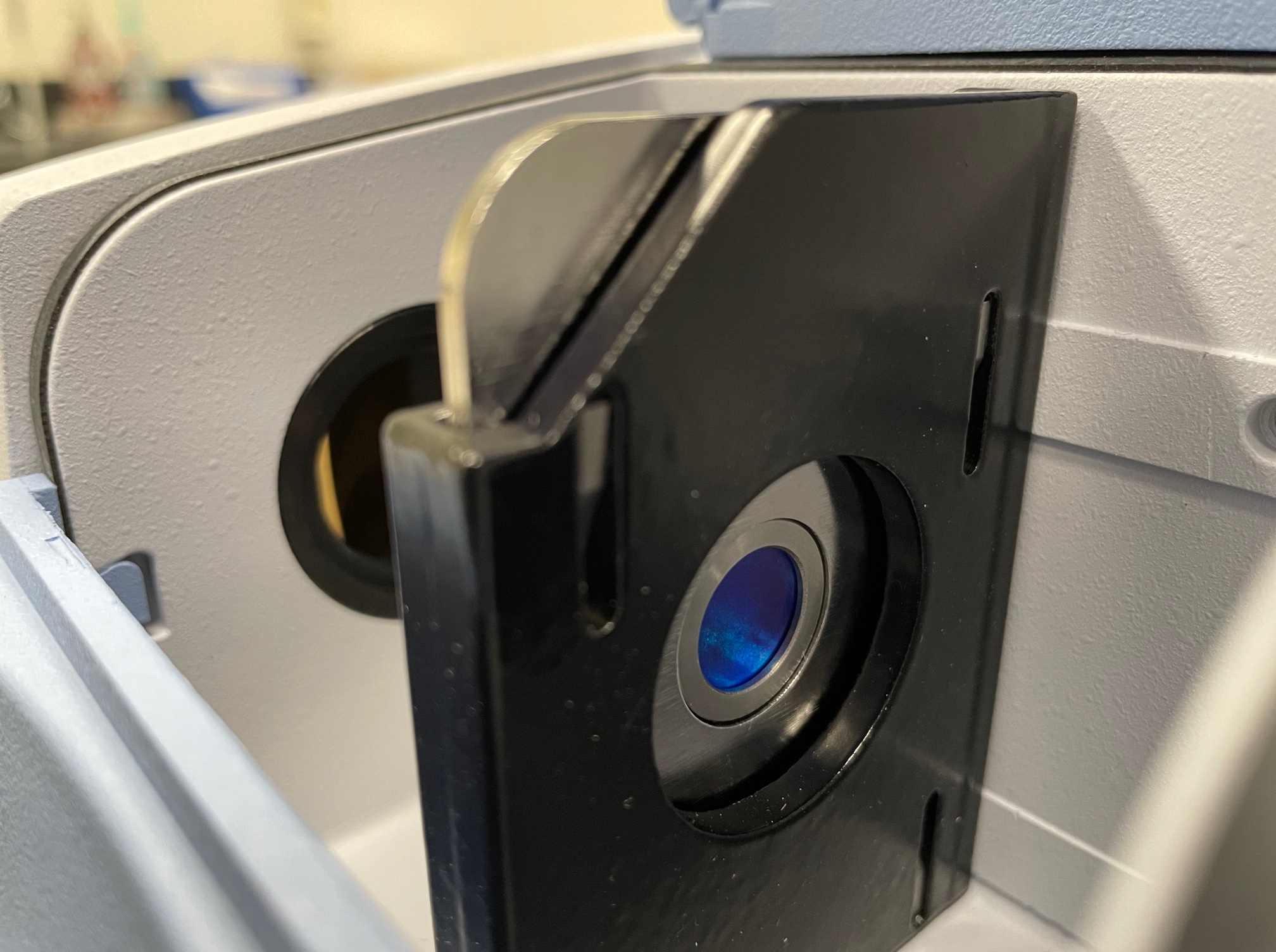
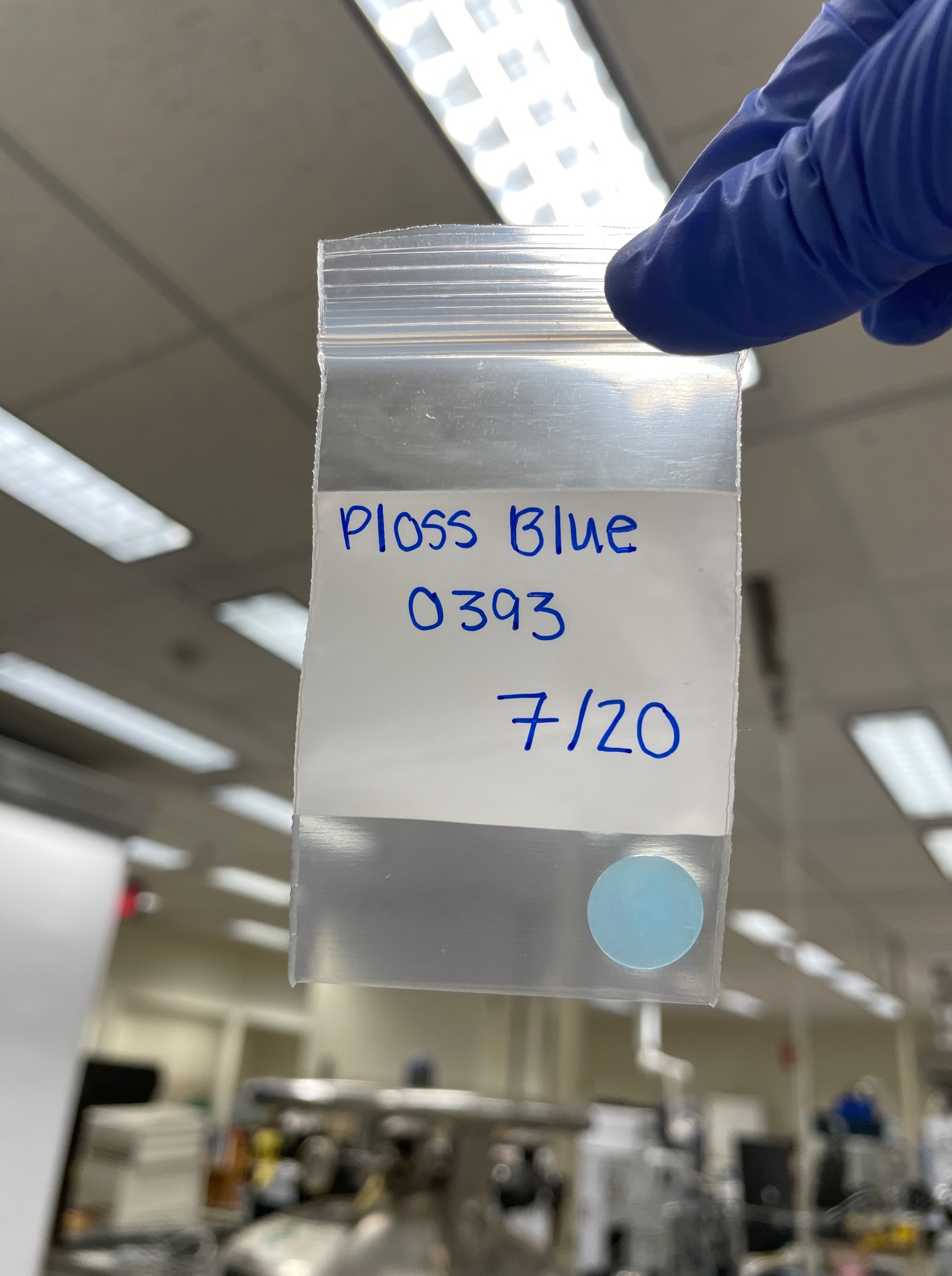
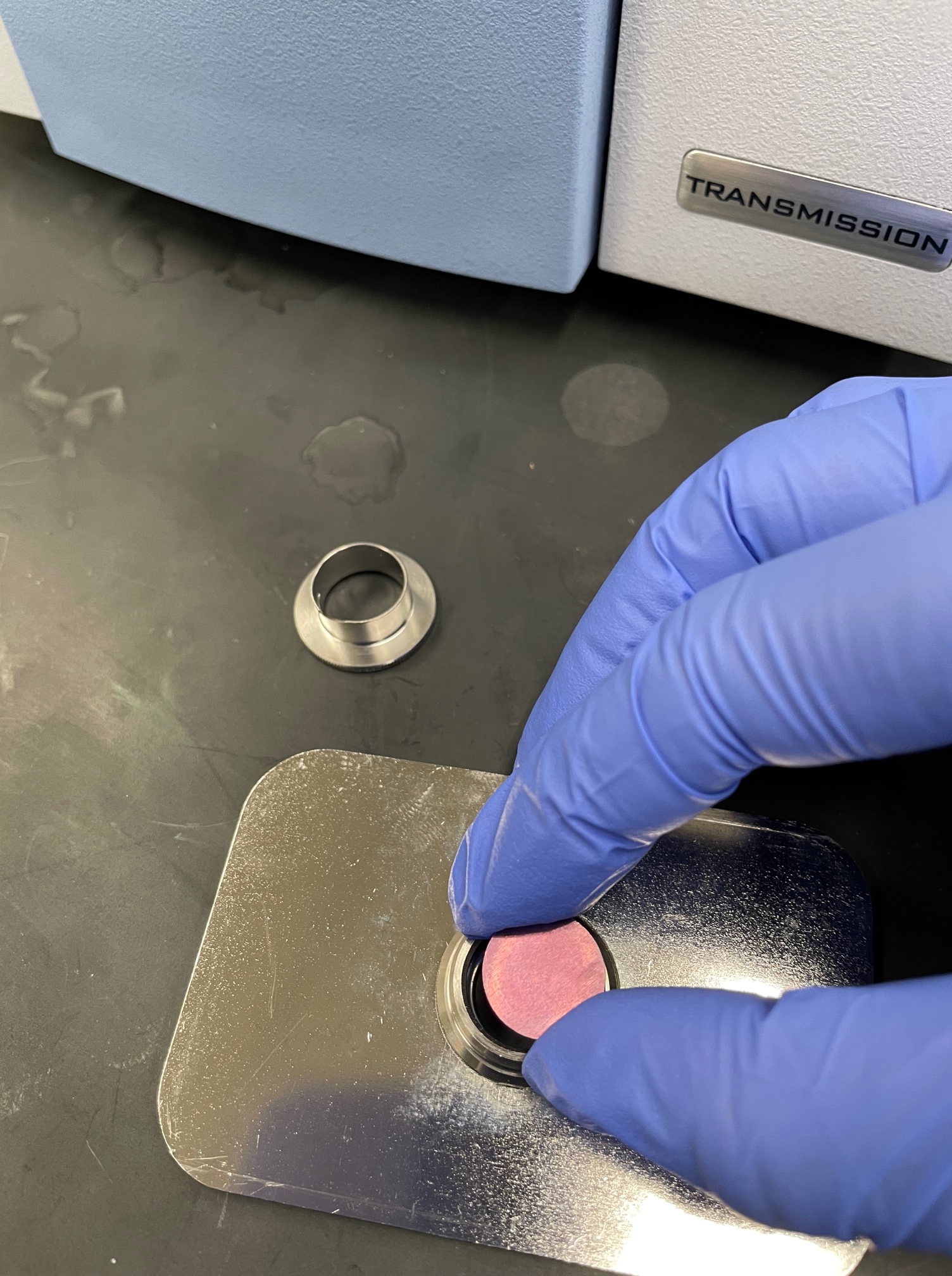
Transmission produced cleanest fingerprint region
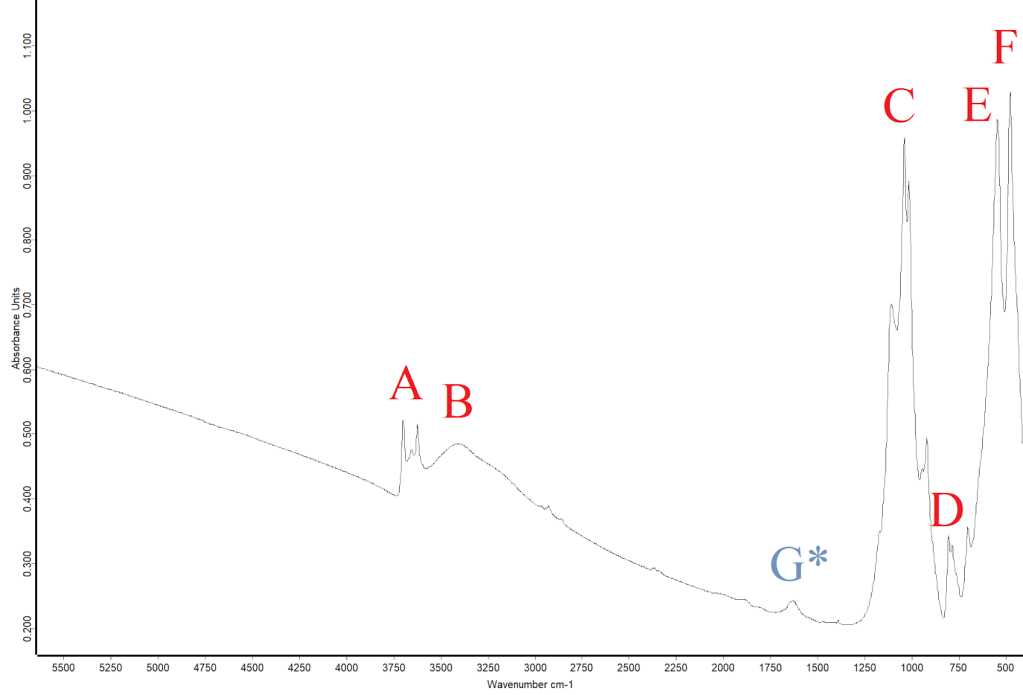
I identified discrepancies in the various modes of FTIR spectroscopy. I deduced the transmission-FTIR mode produced spectra with the cleanest fingerprint region.
The fingerprint region, 1500-500 cm-1, is particularly important for discerning compounds that have similar chemical structures. The transmission mode collected peaks in this region that were sharper and contained less background noise than ATR or DRIFTS. The figure above depicts the transmission spectrum for an ochre, an organic-containing compound. The peaks in the fingerprint region are sharp and contain little background noise.
Historical pigment-media interactions
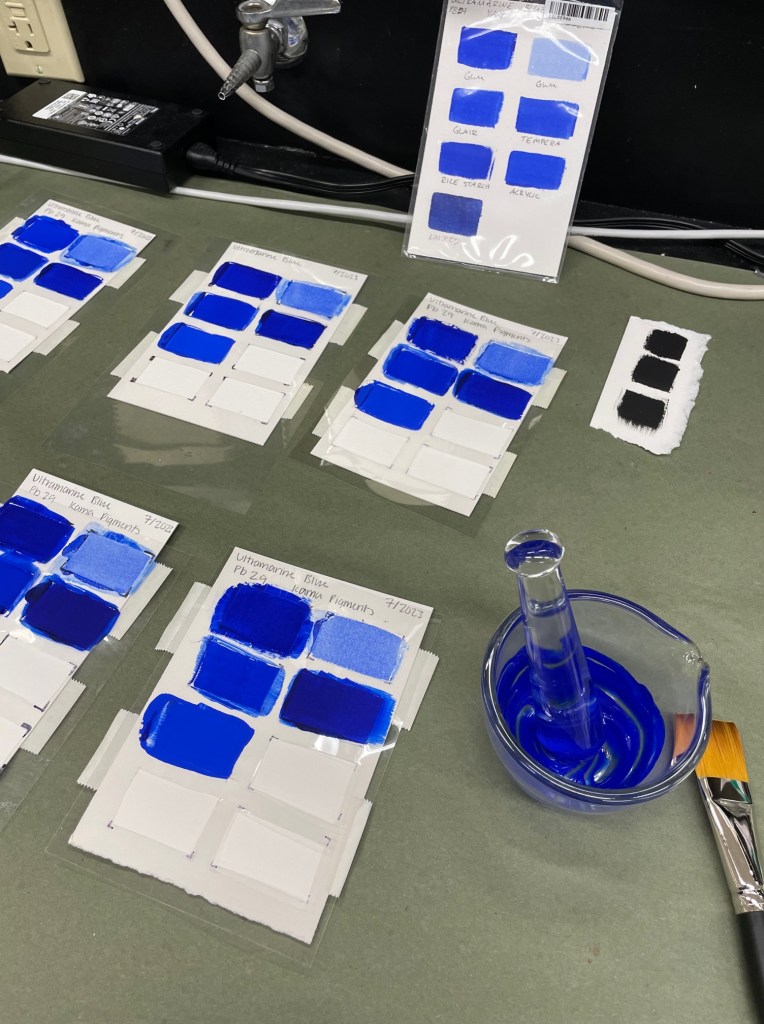
Paint-outs of pigment Ultramarine Blue with binding mediums acrylic, arabic gum, glair, rice starch, and tempera.
At the Library of Congress, I worked with artists’ materials through the Library’s reference colorant collection. I created historical paint mixtures by suspending pigments in different binding mediums that have been used in the past.
Paint-out cards serve as references to measurements taken of objects in the Library’s collection. This complemented my research in working with my material of interest within the context of their intended application.
Recommended reducing moisture in KBr
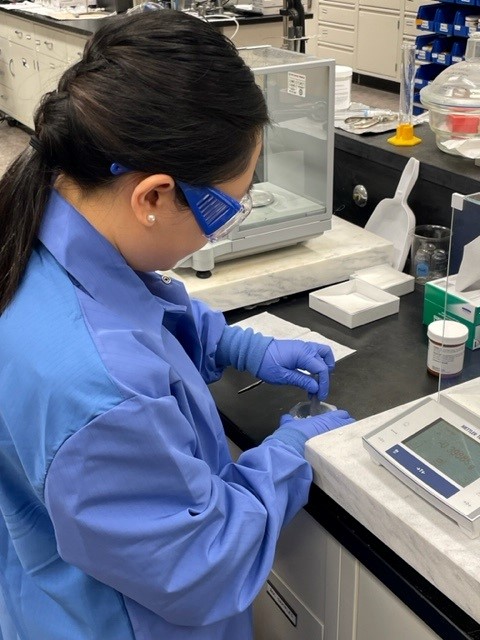
Preparing samples for the Transmission mode.
My instincts for collecting quality data left a legacy for future work on this multi-year initiative. For the DRIFTS and transmission modes, samples must be diluted with an IR-inert substance such as KBr. In order to obtain a clean, or easily to interpret, spectrum, water must be removed from KBr as it’s hygroscopic; that was not possible for the transmission samples. Due to time constraints, I obtained transmission spectra with the moist KBr but left future recommendations to collect data using anhydrous KBr.
Deliverables
Internal Report
The findings of my project were summarized in a 17 page written report.
File available upon request.
Verbal Presentation
I delivered a 10 minute presentation internally to the Preservation Research and Testing Division.
Slides available upon request.
Blog Post
The blog post that I created can be found by clicking on the link here.
Image Gallery
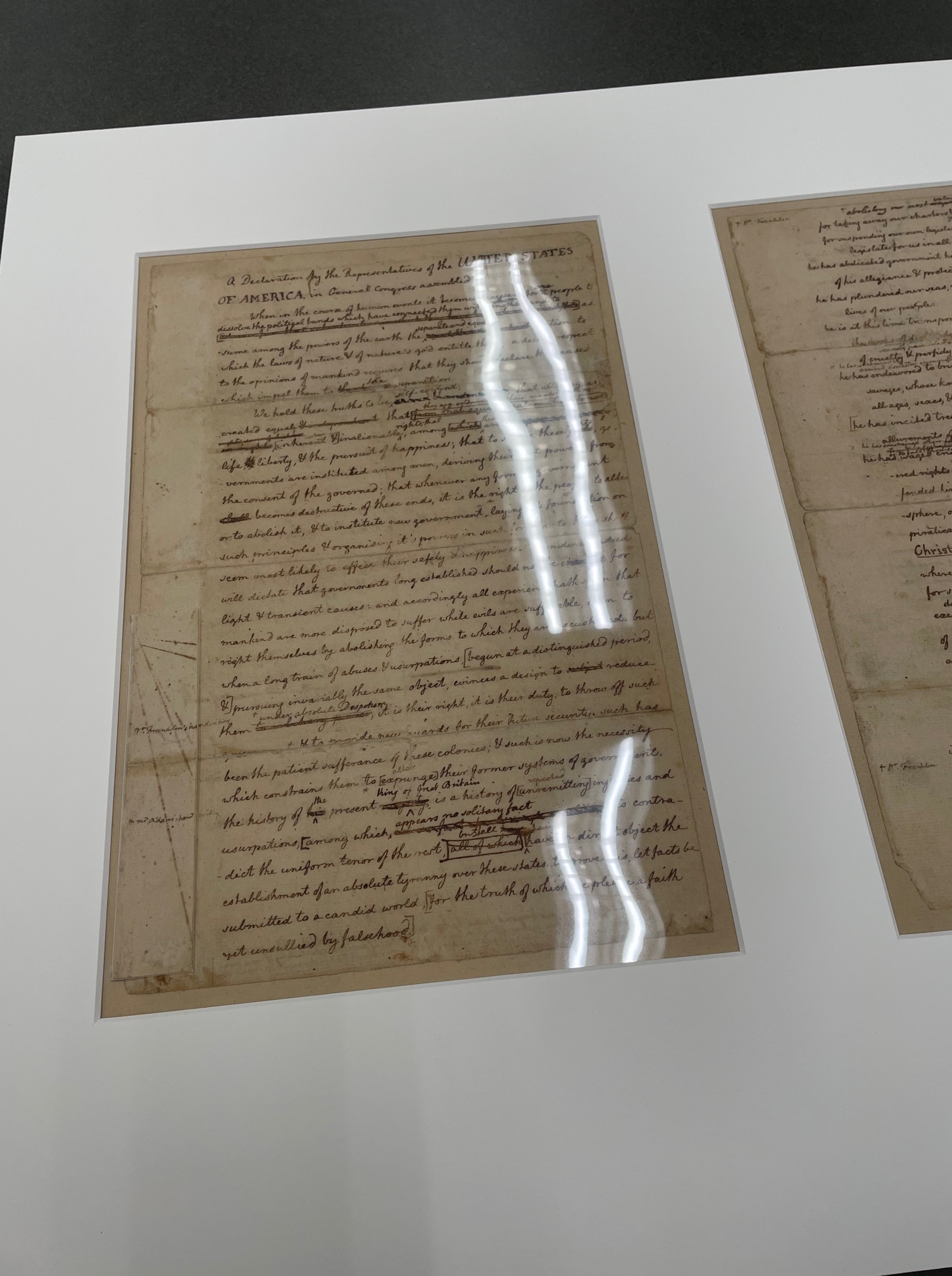
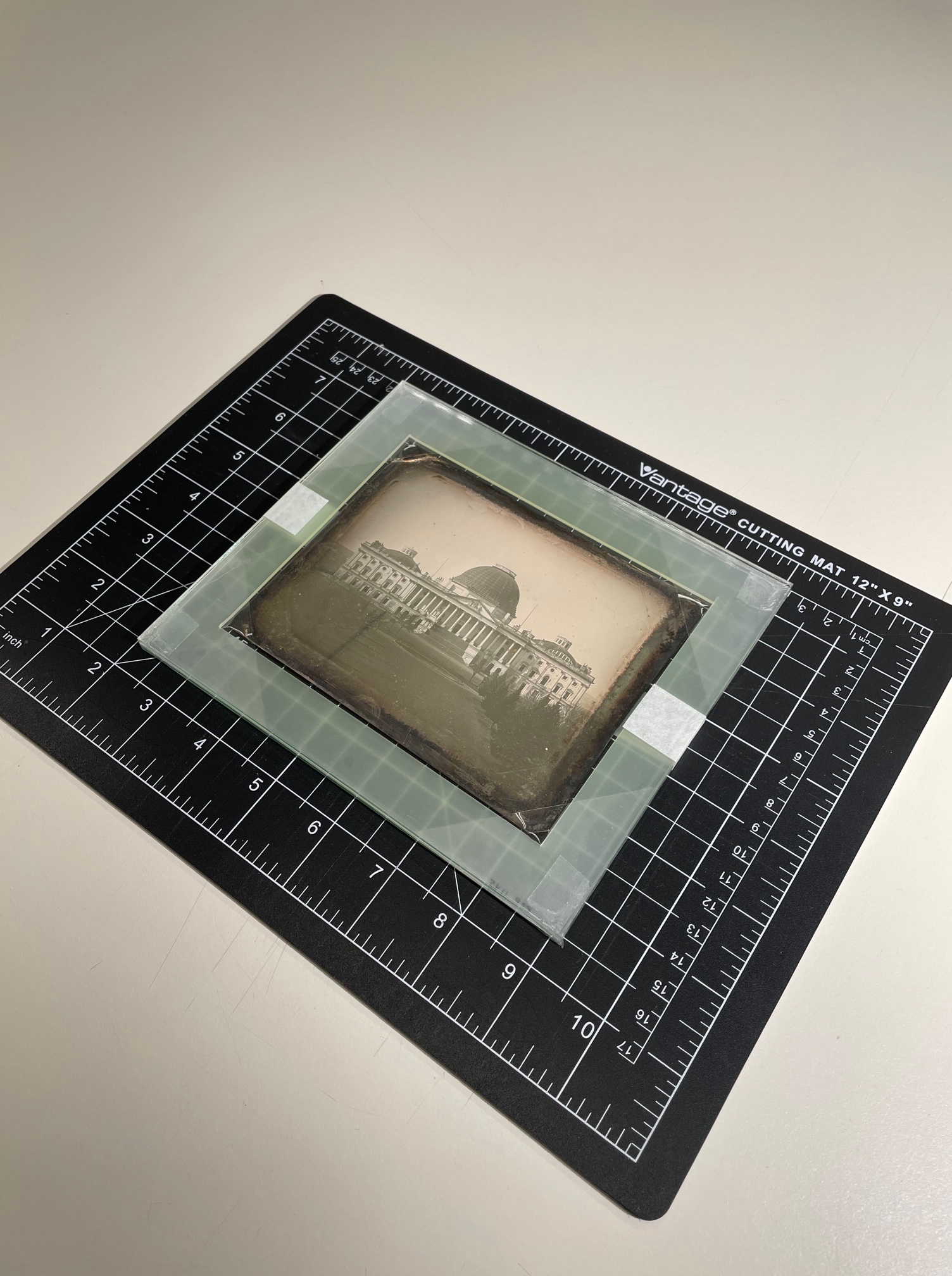
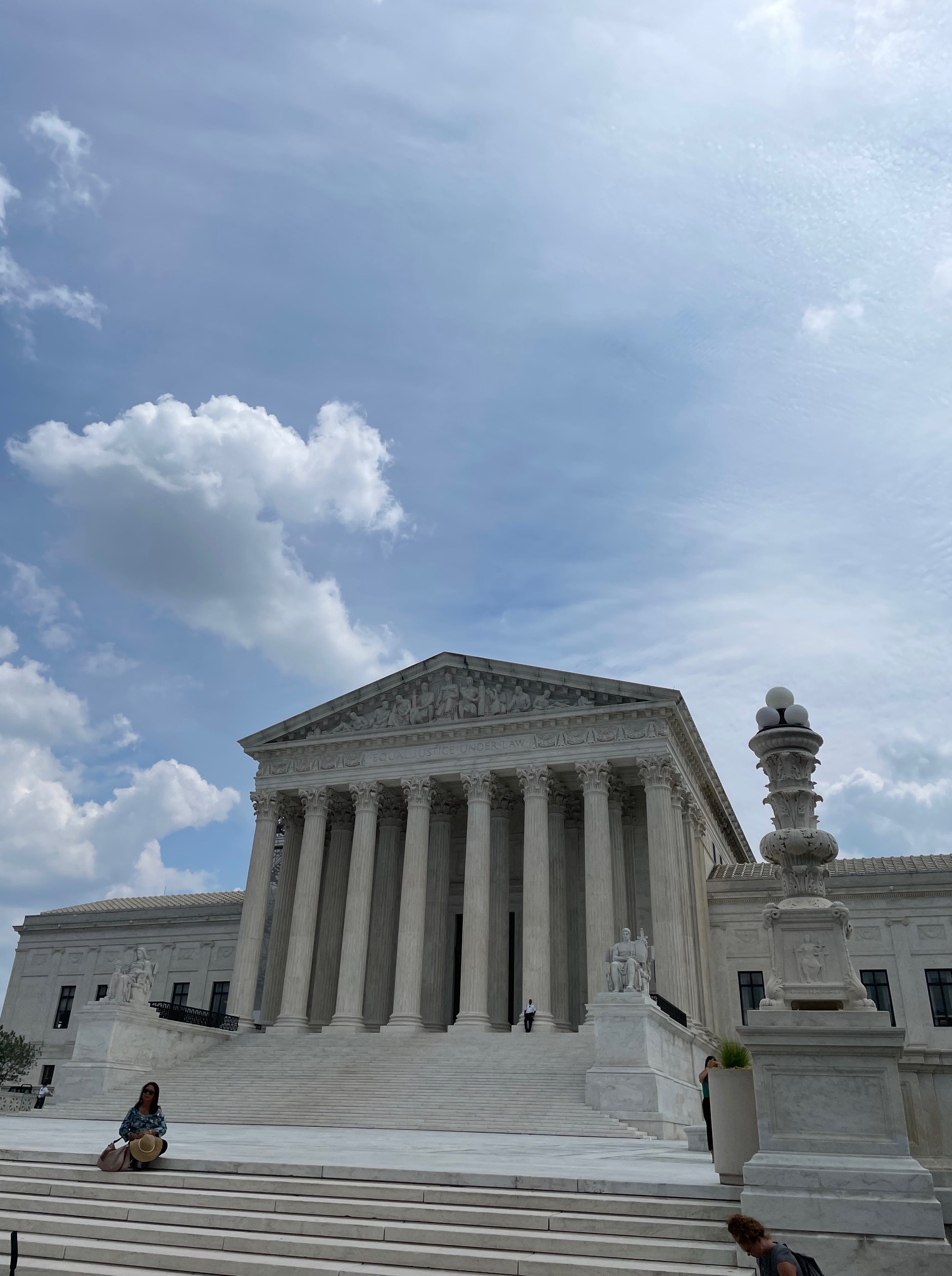
Here are some of the other things I saw around the Library!

 Sarah Fong